
You are staining bacterial samples for identification. As you place this sample to view under the microscope, the bacterial shape you observe is:
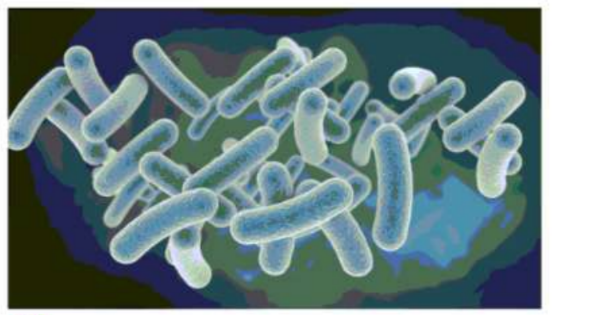
Cocci is the correct bacterial shape observed.
Cocci are spherical or round shaped bacteria. They are one of the most common shapes observed in bacteria, alongside rod-shaped bacilli and spiral-shaped spirochetes or vibrio. The shape of a bacterium can provide significant information about its identity and pathogenicity.
Bacilli are rod-shaped bacteria, not spherical. They can be found alone or in chains, and include species such as Escherichia coli and Bacillus anthracis. This shape differs from the round shape of cocci.
Spirochetes are spiral-shaped bacteria. This distinct shape, which is more complex than that of cocci or bacilli, allows these bacteria to move in a corkscrew motion. Spirochetes include pathogenic species such as Treponema pallidum, the bacterium responsible for syphilis. However, they do not have the round shape of cocci.
Vibrio are comma-shaped bacteria. Their curved rod shape is distinct and different from the round shape of cocci. Vibrio cholerae, the bacterium responsible for cholera, is an example of this shape.
Cocci are spherical or round-shaped bacteria. They can exist alone or in groups, forming pairs (diplococci), chains (streptococci), or clusters (staphylococci). The shape of cocci is consistent with the round shape observed under the microscope.
The bacterial shape observed under the microscope is cocci, which are round or spherical. Other bacterial shapes such as bacilli (rod-shaped), spirochetes (spiral-shaped), and vibrio (comma-shaped) can be ruled out based on their distinct shapes. The shape of bacteria is an important characteristic used in microbial classification and identification.
Related Questions
View allConsidering that sperm cells must be at a lower temperature than the b...
Which of the following pictures reflects the effect on red blood cells...
Which of these years had the biggest increase in nesting sites over th...
In the human male, which of these structures produces sperm cells?
The diagram below shows the rough endoplasmic reticulum of a cell as s...
Related Quizzes
View allNLN NEX Math Practice Test
NEX Math Practice
NLN NEX Math Quizlet
NLN NEX Math
NEXT Generation Science Standards Intro
NLN NEX Science Quizlet
NLN NEX Science
NLN NEX Science Practice Questions
NEX Verbal
NLN NEX Verbal Quizlet
- ✓ 500+ Practice Questions
- ✓ Detailed Explanations
- ✓ Progress Analytics
- ✓ Exam Simulations