
The onset of the Second World War led the federal government to most immediately address which of the following issues?
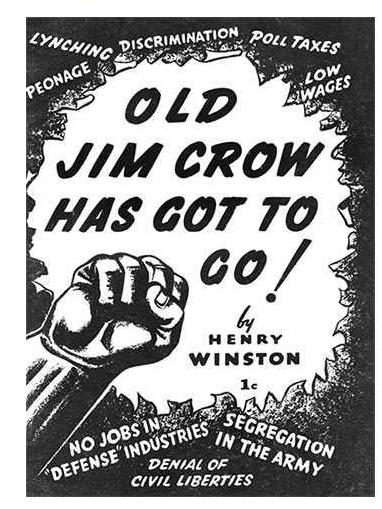
Desegregating defense industries was the most immediate issue addressed by the federal government after the onset of the Second World War.
The federal government recognized that the war effort required a significant workforce, and addressing racial segregation within defense industries was critical to mobilizing all available resources and labor. This led to initiatives aimed at ensuring equal opportunities for all workers, regardless of race, in support of the war effort.
While desegregating military units was an important issue, it was not addressed until later in the war, particularly with the implementation of Executive Order 9981 in 1948. The immediate focus during the onset of the Second World War was on maximizing the labor force in defense industries to meet urgent wartime needs.
The push to make lynching a federal crime faced significant Congressional resistance and did not gain traction during the early years of the war. While it was a critical civil rights issue, it was not prioritized in the context of wartime mobilization and economic demands.
Civil rights laws were not passed immediately following the war's onset. Although the war highlighted racial inequalities, comprehensive civil rights legislation emerged more prominently in the post-war era, particularly during the Civil Rights Movement of the 1950s and 1960s.
The issue of poll taxes was addressed later with the 24th Amendment in 1964 and subsequent Supreme Court rulings. This was not a pressing issue at the start of World War II, as the federal government was more focused on the immediate demands of war production and workforce integration.
The outbreak of the Second World War prompted the federal government to prioritize the desegregation of defense industries as a means to address labor shortages and ensure a robust war effort. This issue represented a critical intersection of wartime necessity and civil rights, laying the groundwork for future advancements in racial equality within both military and civilian sectors.
Related Questions
View allWhich of the following best describes the controversy over the Iran-Co...
Which of the following was the major achievement of the 1941 Atlantic...
American television programming during the 1950s reflected which of th...
Which of the following is true of labor on the home front during the S...
The Stonewall riots involved which of the following?
Related Quizzes
View allAmerican Government CLEP Cheat Sheet
CLEP College Algebra Exam Questions
CLEP College Algebra Exam Guide
CLEP College Mathematics Exam Secrets Study Guide
CLEP History of the United States II Examination Guide
Humanities CLEP Test Study Guide
CLEP Humanities Test Questions
CLEP Introductory Psychology Examination Guide
College Level Examination Program CLEP Exams Hack
CLEP Western Civilization I Exam Secrets Study Guide
- ✓ 500+ Practice Questions
- ✓ Detailed Explanations
- ✓ Progress Analytics
- ✓ Exam Simulations