
What does the emblem depicted suggest about women's participation in the economy in the early 1900s?
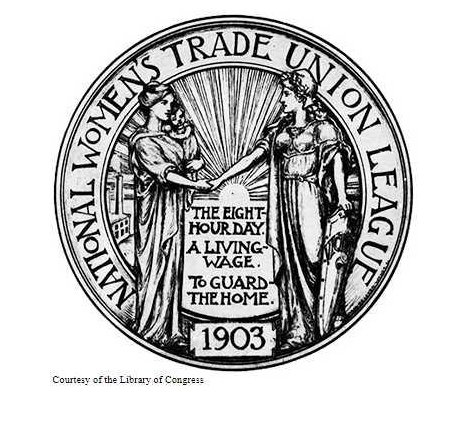
Women employed in textile production and other industries advocated for workers' rights.
During the early 1900s, many women entered the workforce, particularly in industries like textiles, where they began organizing for better working conditions and wages. This emblem likely reflects the growing movement of women advocating for their rights as workers, highlighting their active participation in the economic landscape.
While societal expectations did often limit women's roles, the emblem specifically suggests a more active participation in the economy rather than mere restriction. This choice overlooks the significant number of women who stepped into industrial jobs and engaged in advocacy during this period.
Although some social reformers may have been influenced by Social Darwinism, this choice fails to recognize the primary focus of the emblem on women's participation in labor and advocacy. The emblem's message is more closely aligned with workers' rights rather than a philosophical framework.
This statement inaccurately downplays the influence that working women already had in advocating for labor rights and reforms prior to suffrage. The emblem suggests that these women were already engaged in significant activism, demonstrating their political and social impact.
At this time, there was no federal legislation ensuring equal pay for women. This choice misrepresents the historical context, as women were often paid less than their male counterparts, which underscores the very advocacy highlighted by the emblem.
The emblem emphasizes the active role women played in advocating for workers' rights in the early 1900s, particularly in sectors like textiles. While societal norms did impose restrictions, the emergence of women as vocal advocates for labor reform signifies a critical shift in their participation in the economy. Understanding this historical context illuminates the foundation for future advancements in women's rights and labor legislation.
Related Questions
View allWhich of the following elements of consumer culture did NOT become wid...
Which of the following was a cultural development associated with the...
The presidential debates of 1960 were significant because they
The Dawes Severalty Act of 1887 is associated with which of the follow...
The Haymarket riot of 1886 weakened the labor movement because it
Related Quizzes
View allAmerican Government CLEP Cheat Sheet
CLEP College Algebra Exam Questions
CLEP College Algebra Exam Guide
CLEP College Mathematics Exam Secrets Study Guide
CLEP History of the United States II Examination Guide
Humanities CLEP Test Study Guide
CLEP Humanities Test Questions
CLEP Introductory Psychology Examination Guide
College Level Examination Program CLEP Exams Hack
CLEP Western Civilization I Exam Secrets Study Guide
- ✓ 500+ Practice Questions
- ✓ Detailed Explanations
- ✓ Progress Analytics
- ✓ Exam Simulations