
What does a sequence diagram do?
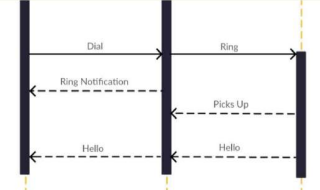
Shows interactions and indicates an order of events.
A sequence diagram is a type of interaction diagram in Unified Modeling Language (UML) that visualizes how objects interact in a particular scenario of a system. It emphasizes both the sequence of messages exchanged between objects and the temporal order in which these interactions occur.
This choice accurately describes the primary function of a sequence diagram, as it not only illustrates the interactions between different components but also emphasizes the chronological order in which these interactions happen. This dual focus is essential for understanding the flow of control in a system.
While this choice acknowledges the representation of event order, it incorrectly implies that sequence diagrams omit certain interactions. In reality, sequence diagrams aim to capture all relevant interactions among objects within the specified scenario, making this choice incomplete.
This option misrepresents the purpose of sequence diagrams by suggesting that they disregard the sequence of events. In fact, these diagrams are specifically designed to illustrate both interactions and their respective orders, thus making this choice incorrect.
This choice conflates sequence diagrams with other types of UML diagrams, such as class diagrams or component diagrams, which focus on static elements. Sequence diagrams are dynamic in nature, focusing on interactions and behaviors over time rather than static structures.
A sequence diagram is essential for visualizing both the interactions between components and the order in which these interactions occur within a system. Choice A encapsulates this dual function accurately, while the other options fail to represent the comprehensive nature of sequence diagrams, leading to misunderstandings about their purpose in modeling software behavior.
Related Questions
View allWhich control structure should be used?
Which output results from the following pseudocode? x = 5 do x = x...
Which two phases of the agile approach are being carried out?
Which two statements describe advantages to using programming librarie...
What is a characteristic of an interpreted language?
Related Quizzes
View all0PC1 Planning Instructional Strategies for Meaningful Learning Version 1
AP01 Elementary Literacy Curriculum Version 1
AQ01 Applied Healthcare Statistics C784 Version 1
ASO1 Introduction to Statistics for Research Version 1
BJ01 Introduction to Business Finance Version 1
C172 Network and Security Foundations Version 1
C180 Introduction to Psychology Version 1
C180 Introduction to Psychology Version 2
CKC1 Introduction to Humanities Version 1
DZ01 Mathematics for Elementary Educators III MATH 1330 Version 1
- ✓ 500+ Practice Questions
- ✓ Detailed Explanations
- ✓ Progress Analytics
- ✓ Exam Simulations