
The primary purpose of the pamphlet was most likely to
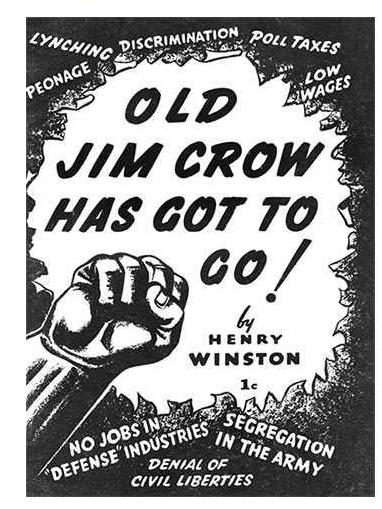
promote activism by African Americans against systemic racism.
The pamphlet "Old Jim Crow has Got to Go," published by the Communist Party of the United States of America in 1941, primarily aimed to awaken and mobilize African Americans to resist and combat systemic racism prevalent in society. It served as a call to action for civil rights and social justice.
This choice accurately reflects the central theme of the pamphlet, which sought to inspire African Americans to actively oppose the discriminatory practices and policies that marginalized them. The Communist Party's focus on racial equality and social justice aligns with this purpose, making it the most relevant option.
While the pamphlet may have acknowledged the war, its primary focus was not on encouraging military participation. Instead, it concentrated on civil rights and combating racism, rather than rallying support for the war effort, which was a separate issue.
Though unity among various groups was a potential outcome, the pamphlet primarily emphasized grassroots activism and self-advocacy within the African American community. It did not specifically promote collaboration with liberal reformers as its main objective.
This choice misinterprets the pamphlet's intent. The document sought to combat systemic racism rather than support opposition to integration. Its purpose was to fight against discriminatory practices, not to oppose educational opportunities for African Americans.
Although economic self-sufficiency is a significant concern, the pamphlet's primary message centered on opposing racial injustice rather than focusing solely on economic issues. It urged activism against systemic racism, which transcended economic considerations.
The pamphlet "Old Jim Crow has Got to Go" was fundamentally aimed at promoting activism among African Americans to combat systemic racism. While various themes may be present, the essence of the document lies in its call to action against oppression, making option A the most accurate representation of its primary purpose. Understanding this context reflects the broader struggle for civil rights during that era.
Related Questions
View allWhich of the following was the most immediate outcome of United States...
The Stonewall riots involved which of the following?
Adoption of the Nixon Doctrine led to
In 1872 President Grant faced opposition from members of his own party...
Which of the following is true of the Settlement House movement?
Related Quizzes
View allAmerican Government CLEP Cheat Sheet
CLEP College Algebra Exam Questions
CLEP College Algebra Exam Guide
CLEP College Mathematics Exam Secrets Study Guide
CLEP History of the United States II Examination Guide
Humanities CLEP Test Study Guide
CLEP Humanities Test Questions
CLEP Introductory Psychology Examination Guide
College Level Examination Program CLEP Exams Hack
CLEP Western Civilization I Exam Secrets Study Guide
- ✓ 500+ Practice Questions
- ✓ Detailed Explanations
- ✓ Progress Analytics
- ✓ Exam Simulations