
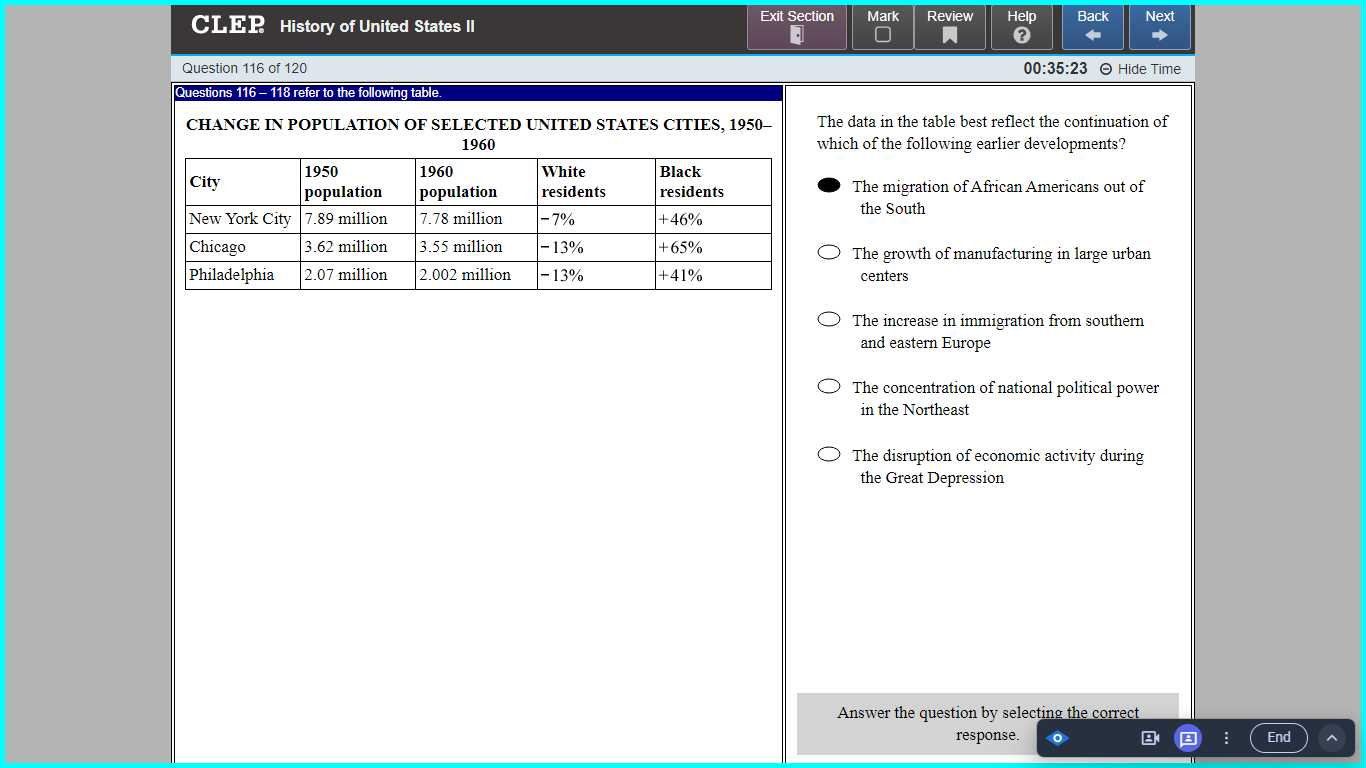
The data in the table best reflect the continuation of which of the following earlier developments?
The migration of African Americans out of the South.
The data in the table likely reflects the ongoing trend of African Americans moving from southern states to northern and western urban areas, seeking better opportunities and escaping systemic racism. This migration, known as the Great Migration, significantly impacted demographics and labor markets in the early to mid-20th century.
This choice accurately represents a significant historical movement that aligns with the data trends presented in the table. The migration of African Americans, particularly during the early 20th century, led to substantial demographic shifts in urban areas as individuals sought to escape oppressive conditions in the South. The table likely portrays the effects and extensions of this migration.
While manufacturing growth is a relevant historical development, it does not directly correlate with the data presented in the context of African American migration. The table may show demographic changes rather than purely economic ones, thus making this choice less applicable to the specific trends being illustrated.
This choice pertains to a different demographic shift occurring simultaneously but is not reflective of the data related to African American migration. The focus on European immigration does not align with the context of the table, which is primarily concerned with the internal migration of African Americans.
The concentration of political power in the Northeast is a broader political development that does not specifically connect to the migration trends indicated in the data. This option diverts from the focus on demographic shifts and the social implications of African American migration.
Although the Great Depression certainly disrupted many aspects of economic life, this choice does not align with the earlier developments depicted in the table. The data likely focuses on population movements rather than the economic disruptions caused by this period.
The data in the table most clearly reflects the ongoing migration of African Americans out of the South, a trend that reshaped American demographics and society during the 20th century. While other developments such as industrial growth and immigration from Europe are significant, they do not capture the essence of the migration patterns highlighted in the provided data. Understanding this migration is crucial for comprehending broader social and economic transformations in the United States during this era.
Related Questions
View allA main effect of the spread of the automobile in the 1920s was that it
Which of the following describes the United States Supreme Court rulin...
Which of the following was the most immediate outcome of United States...
Which of the following was NOT a direct effect of the attacks on the U...
Which of the following was the most popular form of the new mass cultu...
Related Quizzes
View allAmerican Government CLEP Cheat Sheet
CLEP College Algebra Exam Questions
CLEP College Algebra Exam Guide
CLEP College Mathematics Exam Secrets Study Guide
CLEP History of the United States II Examination Guide
Humanities CLEP Test Study Guide
CLEP Humanities Test Questions
CLEP Introductory Psychology Examination Guide
College Level Examination Program CLEP Exams Hack
CLEP Western Civilization I Exam Secrets Study Guide
- ✓ 500+ Practice Questions
- ✓ Detailed Explanations
- ✓ Progress Analytics
- ✓ Exam Simulations