
The change in the number of White residents in the three cities was partly a result of
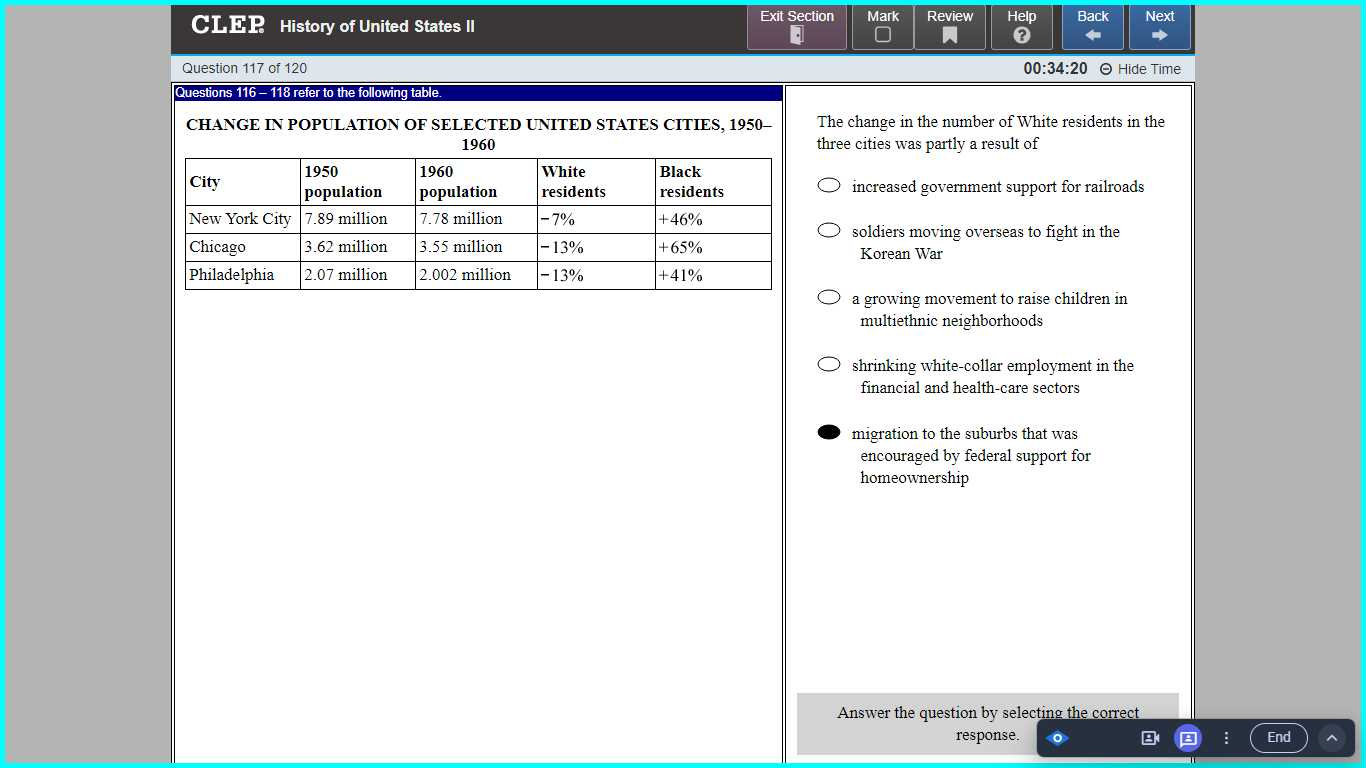
Migration to the suburbs that was encouraged by federal support for homeownership.
The migration of White residents to the suburbs was significantly influenced by federal policies that facilitated homeownership, ultimately leading to demographic shifts in urban areas. This trend was driven by various government initiatives, including the GI Bill and mortgage subsidies, which made suburban living more accessible and appealing.
While increased government support for railroads may have enhanced transportation infrastructure, it did not directly impact the demographic shifts of White residents from urban centers to suburban areas. The movement to the suburbs was more closely linked to housing policies rather than improvements in rail transportation.
The deployment of soldiers during the Korean War influenced many social dynamics, but it was not a primary factor in the change of the White population in cities. The suburban migration occurred largely due to economic incentives and housing availability, rather than military actions.
While there may have been social movements advocating for diversity and multiethnic neighborhoods, the predominant trend for White residents during this period was to seek suburban environments that offered perceived safety and community. This choice was often driven by economic and social factors rather than a specific movement toward multiethnic living arrangements.
Although changes in the job market can influence residential patterns, the suburban migration of White residents was primarily motivated by housing policies and the desire for homeownership. The economic trends in white-collar employment may have played a role, but they were not the main driver of the demographic shift observed.
The movement of White residents to the suburbs is largely attributed to federal support for homeownership, which provided the means for families to relocate away from urban areas. This migration reshaped demographic landscapes in cities, as the allure of suburban living, enabled by government initiatives, transformed residential patterns significantly. Other factors, while relevant, did not play as critical a role in this specific demographic shift.
Related Questions
View allJack Kerouacs novel On the Road is associated with a cultural movement...
Ideas like those described in the excerpt best reflect which of the fo...
All of the following participated in the 1960s counterculture movement...
The Populist Party supported all of the following EXCEPT
Many of the protagonists in Sinclair Lewis' 1920s novels satirized the
Related Quizzes
View allAmerican Government CLEP Cheat Sheet
CLEP College Algebra Exam Questions
CLEP College Algebra Exam Guide
CLEP College Mathematics Exam Secrets Study Guide
CLEP History of the United States II Examination Guide
Humanities CLEP Test Study Guide
CLEP Humanities Test Questions
CLEP Introductory Psychology Examination Guide
College Level Examination Program CLEP Exams Hack
CLEP Western Civilization I Exam Secrets Study Guide
- ✓ 500+ Practice Questions
- ✓ Detailed Explanations
- ✓ Progress Analytics
- ✓ Exam Simulations