
Quantity of money demanded varies:
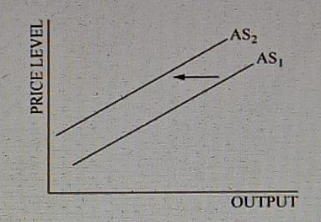
Quantity of money demanded varies inversely with nominal interest rate.
The demand for money is influenced by the nominal interest rate; as interest rates rise, the opportunity cost of holding money increases, leading to a decrease in the quantity of money demanded. Conversely, lower interest rates reduce this opportunity cost, resulting in higher money demand.
While nominal GDP reflects the overall economic activity and can influence money demand, it does not establish a direct relationship. The quantity of money demanded may increase with higher nominal GDP due to greater transaction needs, but this relationship is not purely direct as it also depends on other factors like interest rates and inflation.
This choice correctly identifies the relationship between money demand and nominal interest rates. As nominal interest rates rise, individuals and businesses prefer to hold less money since they could earn interest on it instead. Therefore, the quantity of money demanded decreases, substantiating the inverse relationship.
The quantity of money demanded does increase with the price level, as higher prices require more money to facilitate transactions. However, this relationship is not absolute and can be affected by changes in interest rates and economic expectations, making it less straightforward than the inverse relationship with interest rates.
This option is incorrect as real GDP typically indicates the overall economic output. Generally, an increase in real GDP leads to an increase in the quantity of money demanded because more economic activity necessitates more liquidity for transactions. Thus, the relationship is not inverse.
The quantity of money demanded is primarily influenced by nominal interest rates, showcasing an inverse relationship. Higher interest rates lead to a decreased demand for money due to the higher opportunity cost of not investing. In contrast, nominal GDP, price levels, and real GDP interact with money demand in more complex ways, supporting the assertion that the inverse relationship with nominal interest rates is the fundamental principle governing money demand dynamics.
Related Questions
View allHigher US interest rates attract foreign capital â†' dollar:
Rightward shift of AD in short run can be caused by:
Which model shows households supplying factors of production and firms...
Policy that lowers nominal interest rate:
Deep recession: Fed wants +$5 bn money supply with 10 % RR should:
Related Quizzes
View allAmerican Government CLEP Cheat Sheet
CLEP College Algebra Exam Questions
CLEP College Algebra Exam Guide
CLEP College Mathematics Exam Secrets Study Guide
CLEP History of the United States II Examination Guide
CLEP History of the United States II Examination Guide
Humanities CLEP Test Study Guide
CLEP Humanities Test Questions
CLEP Introductory Psychology Examination Guide
CLEP Western Civilization I Exam Secrets Study Guide
- ✓ 500+ Practice Questions
- ✓ Detailed Explanations
- ✓ Progress Analytics
- ✓ Exam Simulations