
This painting was created by
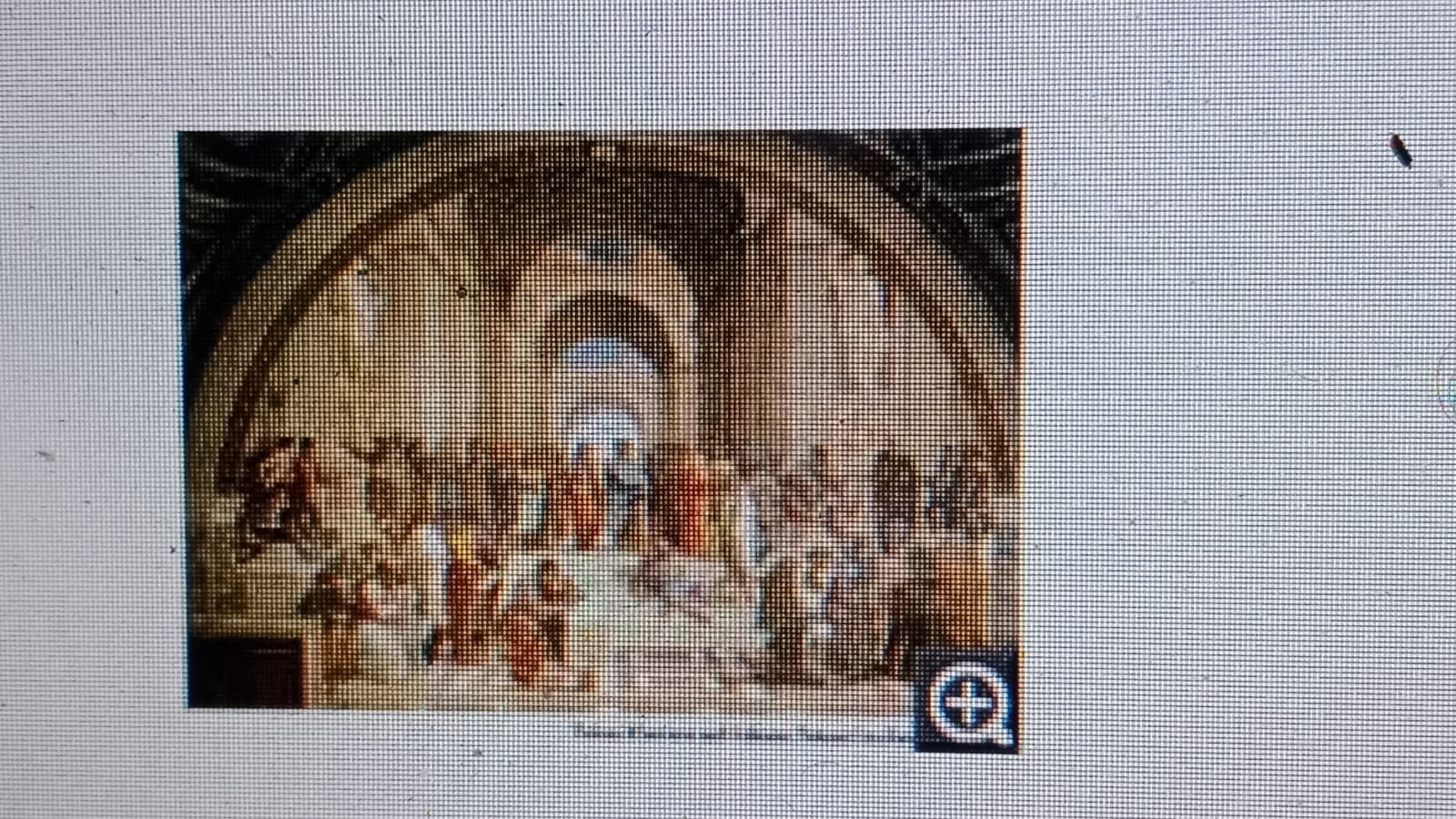
Raphael created this painting.
Raphael, an influential figure of the High Renaissance, is known for his masterful compositions and harmonious use of color, which are evident in this painting. His style integrates classical elements with emotional depth, showcasing why he remains a pivotal artist in art history.
Albrecht Durer was a prominent German painter and printmaker known for his detailed woodcuts and engravings. While his work significantly impacted Northern Renaissance art, he is not associated with the painting in question, which is characteristic of Raphael's Italian style.
Donatello was a renowned sculptor of the Early Renaissance, famous for his lifelike sculptures and mastery of form. Although he made substantial contributions to the arts, particularly in sculpture, he did not create paintings, making this choice incorrect.
Hans Holbein the Younger was a Swiss painter known for his detailed portraiture and work in England during the Tudor period. While he produced significant works, his style and subjects differ from those of Raphael, indicating he did not create this particular painting.
Andrea del Verrocchio was a master painter and sculptor who influenced many artists, including Leonardo da Vinci. Although he played a crucial role in the Renaissance, his work does not match the distinctive qualities found in Raphael's paintings, making him an unlikely creator of this artwork.
Identifying the artist of a painting is essential in understanding its historical and stylistic context. Raphael's unique approach to composition and use of color sets his work apart from that of his contemporaries, such as Durer, Donatello, Holbein, and Verrocchio. This distinction affirms Raphael's role as the creator of the painting in question, highlighting his enduring impact on the art world.
Related Questions
View allWhich of the following is a literary device that is used to hint at a...
Line 5 ('Whan Zephirus ... breeth') makes use of which literary device...
In Franz Kafka's The Metamorphosis, the protagonist, Gregor Samsa, wak...
The purpose of the Greek amphora was to serve as a
The Divine Comedy was written by
Related Quizzes
View allAmerican Government CLEP Cheat Sheet
CLEP College Algebra Exam Questions
CLEP College Algebra Exam Guide
CLEP College Mathematics Exam Secrets Study Guide
CLEP History of the United States II Examination Guide
CLEP History of the United States II Examination Guide
Humanities CLEP Test Study Guide
CLEP Introductory Psychology Examination Guide
College Level Examination Program CLEP Exams Hack
CLEP Western Civilization I Exam Secrets Study Guide
- ✓ 500+ Practice Questions
- ✓ Detailed Explanations
- ✓ Progress Analytics
- ✓ Exam Simulations