
The figure below represents the human eye. The part of the eye where the rods and cones are located is called the
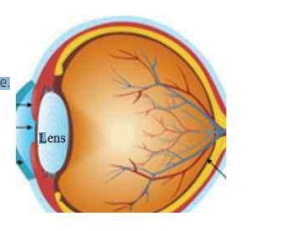
The rods and cones in the human eye are located in the retina.
The retina is a thin layer of tissue at the back of the eye that contains millions of photoreceptor cells called rods and cones. These cells convert light into electrical signals that are sent to the brain through the optic nerve, allowing us to perceive visual information.
The lens is not where rods and cones are located. Instead, it is a clear, flexible structure located behind the iris and pupil that focuses light onto the retina. Its primary function is to bend (refract) incoming light to produce clear, sharp images on the retina.
The optic nerve is not the location of rods and cones either. It is a bundle of nerve fibers that transfers visual information from the retina to the brain in the form of electrical signals. The optic nerve is essential for vision, but it does not contain the photoreceptor cells responsible for detecting light and color.
The cornea is the eye's outermost layer. It is a clear, dome-shaped surface that covers the front of the eye. While it plays a crucial role in focusing light entering the eye, it does not contain rods and cones. These photoreceptor cells are located exclusively in the retina.
The retina is the correct answer. It is the innermost layer of the eye, located at the back of the eye. The retina is composed of light-sensitive tissue and contains the photoreceptor cells known as rods and cones. These cells are responsible for converting light into electrical signals that can be interpreted by the brain, enabling vision.
The rods and cones, the photoreceptor cells responsible for detecting light and color, are located in the retina, the innermost layer of the eye. Other parts of the eye, such as the lens, optic nerve, and cornea, play crucial roles in the process of vision but do not contain these photoreceptor cells. Understanding the structure and function of the eye is fundamental to understanding how we see.
Related Questions
View allWhich part of the digestive system removes water from the indigestible...
Which organ system functions to protect the body from exposure and can...
Which of the following cells accounts for the highest percentage of wh...
The chemical reaction that occurs when an antacid is prescribed to tre...
A person who can no longer store and concentrate bile in the gallbladd...
Related Quizzes
View allNLN NEX Math Practice Test
NEX Math Practice
NLN NEX Math Quizlet
NLN NEX Math
NLN NEX Science Practice Test
NEXT Generation Science Standards Intro
NLN NEX Science Quizlet
NLN NEX Science
NEX Verbal
NLN NEX Verbal Quizlet
- ✓ 500+ Practice Questions
- ✓ Detailed Explanations
- ✓ Progress Analytics
- ✓ Exam Simulations