
Given the following image, which endocrine structure is formed from the luteinization of the collapsed follicle?
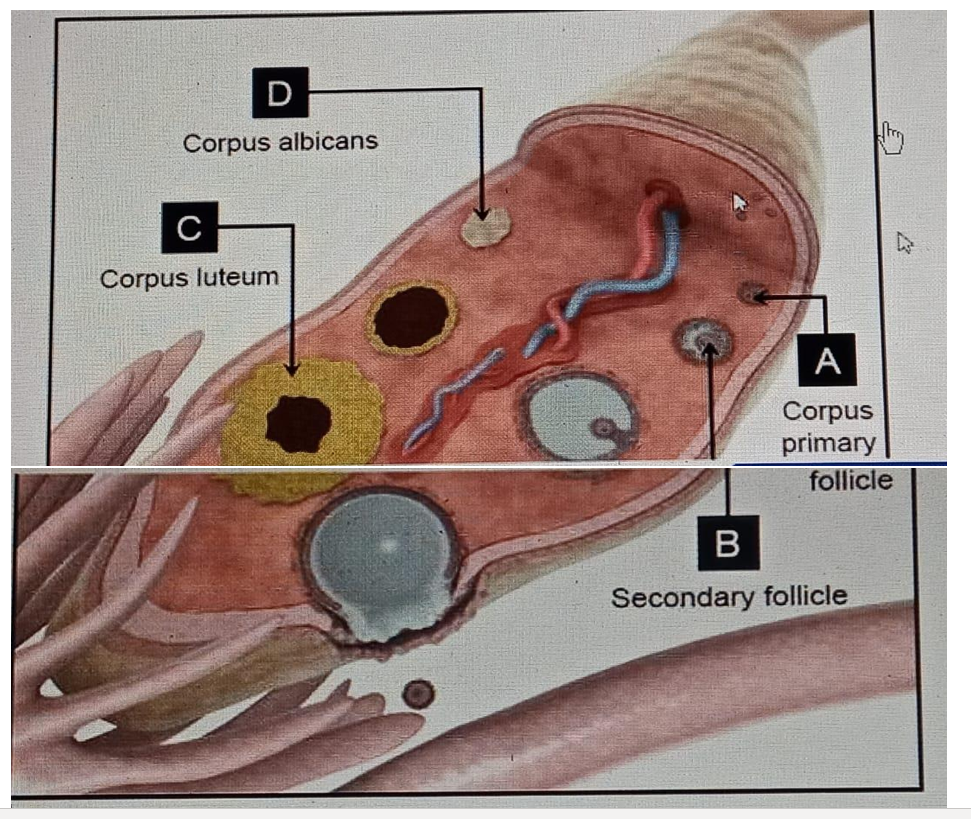
Corpus luteum is formed from the luteinization of the collapsed follicle.
The corpus luteum is a temporary endocrine structure that develops from the remnants of a ruptured ovarian follicle after ovulation. This structure plays a crucial role in the production of hormones such as progesterone, which is vital for maintaining the early stages of pregnancy.
The term "corpus primary" does not refer to any recognized structure in reproductive biology. It may be an incorrect reference to an earlier stage in follicular development, but it does not relate to the luteinization process or the formation of a functional endocrine structure after ovulation.
The corpus albicans is the scar tissue formed when the corpus luteum degenerates after its role in hormone production is concluded. It represents a later stage in the lifecycle of the follicle and is not formed from luteinization; instead, it is a result of the regression of the corpus luteum when pregnancy does not occur.
The corpus luteum is the correct answer, as it is formed from the luteinization of the collapsed follicle following ovulation. This structure is essential for secreting progesterone and estrogen, hormones necessary for preparing the endometrium for potential implantation of a fertilized egg.
This option is a repeat of choice B and, as explained, refers to the degenerative remnant of the corpus luteum. It does not form during luteinization and represents a non-functional state after the active hormone-producing phase of the corpus luteum.
The corpus luteum is a key structure resulting from the luteinization of the ruptured follicle post-ovulation, essential for hormone production in the menstrual cycle and early pregnancy. In contrast, the corpus albicans signifies the end of the corpus luteum's function and is not involved in the luteinization process itself. Understanding these structures is critical for grasping reproductive physiology and the hormonal regulation of the menstrual cycle.
Related Questions
View allWhich term describes the position of the ankle relative to the knee?
Which function is performed by the hormone thymosin?
Which structure is filled with blood vessels that bring oxygen and nut...
Which tissue type contains specialized fluid that allows for transport...
What is the perichondrium?
Related Quizzes
View all0PC1 Planning Instructional Strategies for Meaningful Learning Version 1
AP01 Elementary Literacy Curriculum Version 1
AQ01 Applied Healthcare Statistics C784 Version 1
ASO1 Introduction to Statistics for Research Version 1
BJ01 Introduction to Business Finance Version 1
C172 Network and Security Foundations Version 1
C180 Introduction to Psychology Version 1
C180 Introduction to Psychology Version 2
CKC1 Introduction to Humanities Version 1
DZ01 Mathematics for Elementary Educators III MATH 1330 Version 1
- ✓ 500+ Practice Questions
- ✓ Detailed Explanations
- ✓ Progress Analytics
- ✓ Exam Simulations