
What does the supply line represent?
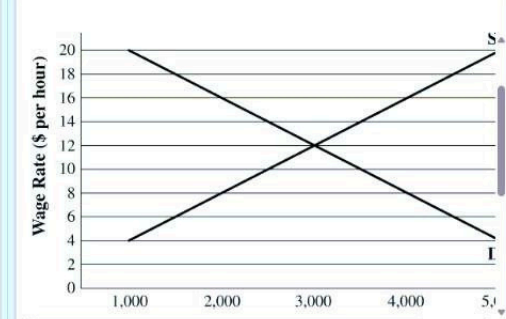
The supply line represents the number of hours people are willing to work at any given wage rate.
The supply line in labor economics illustrates the relationship between wage rates and the quantity of labor that workers are willing to offer. It reflects how changes in wages can influence the number of hours that individuals are prepared to work, highlighting the supply side of the labor market.
This choice accurately describes the supply line, as it directly correlates the wage rate with the quantity of labor supplied. Higher wages typically incentivize more hours worked, demonstrating the willingness of individuals to supply their labor in response to wage changes.
This option misrepresents the concept of the supply line, as it pertains to the demand side of the labor market rather than the supply side. Employers' willingness to provide hours relates to labor demand, not the supply of labor from individuals.
This choice incorrectly implies that the supply line is based on government estimates or regulations. The supply line is determined by individual worker preferences and choices, rather than any external governmental guidance.
Similar to option C, this choice confuses the supply line with demand-side factors relating to government policies. The supply line reflects actual worker behavior based on market conditions, not government prescriptions or estimates.
The supply line is a fundamental concept in labor economics that captures the willingness of workers to offer their labor at varying wage rates. Option A accurately reflects this relationship, while the other choices incorrectly address aspects of the labor market that pertain to employer behavior or government intervention. Understanding the supply line is crucial for analyzing labor market dynamics and the effects of wage fluctuations on workforce participation.
Related Questions
View allThe following is a list of events in Taylor's life. I. President of th...
When is a government most likely to establish a wage floor?
Which amendment has been interpreted to prohibit a state from collecti...
Assume that the state of Kansas passed a law limiting the number of ho...
Which statement best describes a key aspect of the trade relationship...
Related Quizzes
View all- ✓ 500+ Practice Questions
- ✓ Detailed Explanations
- ✓ Progress Analytics
- ✓ Exam Simulations